Posted by David Porter on April 29, 2011 · 2 Comments

I suppose this is a character trait that I inherited from my mother, but I am completely addicted to bright, vibrant, saturated colors. I suppose if you peek around our website, that becomes fairly obvious.
You won’t find any pastels lurking here.
I shot this photograph at the Desert Botanical Garden here in Phoenix, Arizona.
How about you? What kinds of colors bring you joy?
Posted by David Porter on April 28, 2011 · 2 Comments
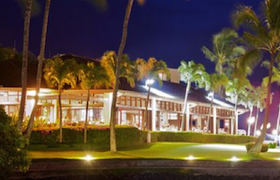 The Beach House Restaurant ~ Kauai, Hawaii – The Beach House Restaurant on Kauai is well-known to both residents and visitors for its spectacular oceanfront setting (think beautiful sunsets) along the island’s sunny south shore.
The restaurant is a consistent winner of Honolulu Magazine’s “Best Kauai Restaurant”. Further, their fish is sourced from Island fisherman, with their beef and coffee coming from neighboring ranches.
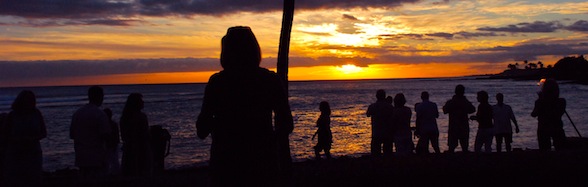
Our visit found us at a spectacular oceanfront table, in front of large, opened sliding glass doors, so that we might enjoy the sound of the surf and the coming sunset.
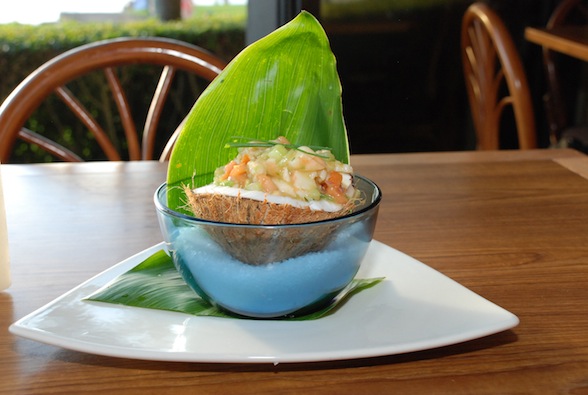
After a nice glass of bubbly, we started our Hawaiian gastronomical journey with The Beach House Ceviche (served in a Half Coconut with Island White Fish, Scallops, & Tiger Prawns marinated in Citrus & Passion Fruit Juices with Cucumber, Tomato, & Avocado). YUM!
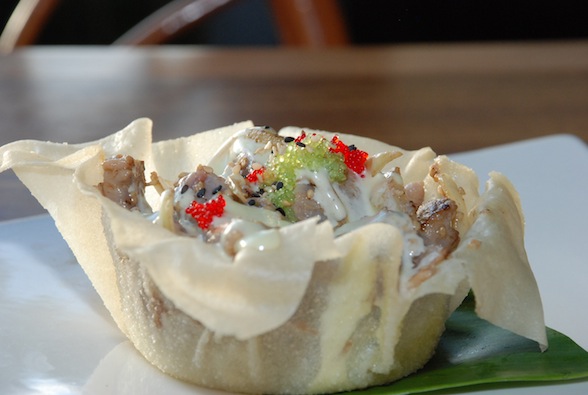
Next, we shared Seared Island Fresh Fish Ahi Poke (served in a Crispy Lumpia Bowl with Asian Slaw, Wasabi Mirin Aioli & Tabiko Caviar). Most delicious, and a hint that we were in for a consistent and fabulous journey.
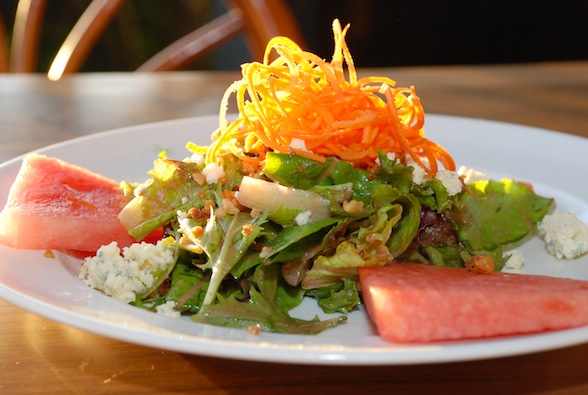
Next up was Watermelon Salad (with Omao, Kauai Greens, Red Onion, Carrot, caramelized Macadamia Nuts, Gorgonzola Cheese & Raspberry Vinaigrette). Nice!
We further shared Seafood Corn Chowder (with Crab, Fresh Fish, Chive & Sherry). Yabba Dabba Doo! That was good!

As we were enjoying our appetizers, we noticed quite a crowd building outside to photograph our table-side sunset view. Very nice, don’t you agree?
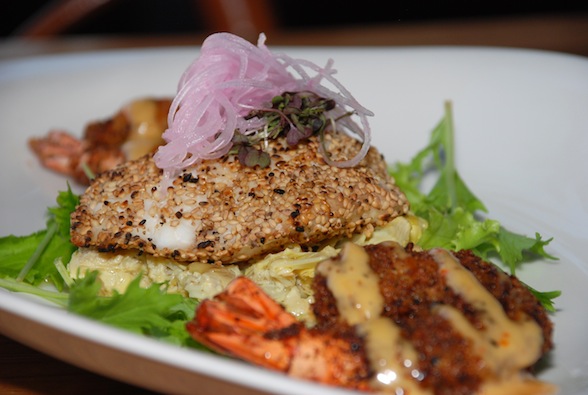
Now, for her entree, Carol opted for the night’s fresh catch: Opaka (Grilled and Sesame Crusted over a Braised Artichoke Salad and Mustard Greens. Served with two Jumbo Furikake Crusted Shrimp with a Sweet Thai Chili Aoli). Wow!
For my entree, Mr. Roaming Boomer ordered Wasabi Crusted Fresh Island Mahi Mahi (with Lilikoi Lemongrass Beurre Blanc). Major Mouthgasm Alert! Have you ever enjoyed a dish so much that you were tempted to stand on your tabletop and sing your entrees praises? Seriously, this just may have been the best fish entree of my entire life. Absolutely, out of this world, incredible!
I don’t smoke, but I think I need a cigarette after such a wonderful rush of endorphins.
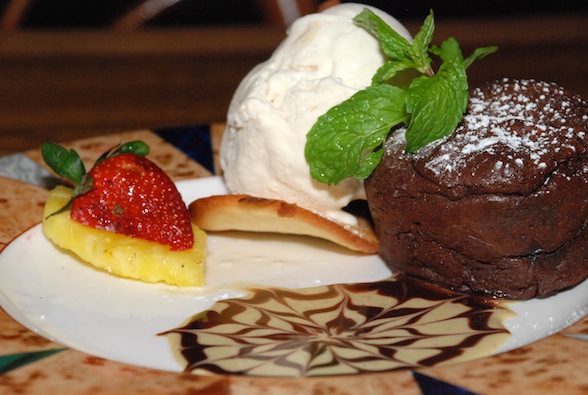
As the final round of our majestic gourmet symphony was about to conclude, out came Molten Chocolate Desire (A Flour-less Chocolate Tort, Baked to Order & served hot with Lappert’s Vanilla Bean Ice Cream & Espresso Créme Anglaise). With a double espresso in hand, this was the absolute perfect ending to a most romantic, and delightful evening.
To Chef Todd Barrett, and the whole Beach House Restaurant Kauai team: Bravo! A perfect dining experience in every possible way!
Disclosure: this most wonderful dining experience was provided by the kind, and cool folks at the Beach House Restaurant. Thanks!
Posted by David Porter on April 28, 2011 · Leave a Comment
 We quite often here from our readers that they can’t afford to stay at many of the five-star resorts that we frequent.
Well, here’s a little secret.
With a little planning, you absolutely can afford to enjoy champagne travel on a beer budget.
5 Tips to Enjoy Champagne Travel on a Beer Budget
- Travel in shoulder/off-season periods – we have found that this simple strategy can save you hundreds of dollars. In fact, we have saved as much as 75% off daily rack rates traveling in off-peak times. Plus, there are no crowds!
- Follow travel destinations on Facebook & Twitter – absolutely every single day you can find amazing travel deals directly from travel destinations. Because there are no middle-men involved, they can pass on incredible deals to you when they see their occupancies waning.
- Take advantage of travel rewards credit cards/programs – a full 50% of our airline expenses are free because of travel reward programs that we participate in. One caveat: you must pay your credit card off each month. If not, this is a horrible idea.
- Ask for upgrades – you would be surprised what a cheerful smile and the courage to ask will do. We have enjoyed countless free upgrades over the years by simply asking at the registration desk. Why not ask for a free upgrade and enjoy the champagne style of a luxury suite?
- Register with watchdog sites – there are countless “watchdog” services like airfarewatchdog.com who will keep a sharp eye open for amazing travel deals. Many times this will require flexibility in your travel dates, but we have seen abolutely unbelievable rates. For example, we have a friend who flew to Israel for $99 each way last year. Amazing, right?
So, raise your right hand and repeat after me: with a little planning, I too can enjoy champagne travel on a beer budget.
The key is planning.
So, put a plan in place, and get out there and travel. The world awaits you!
Posted by David Porter on April 28, 2011 · Leave a Comment

WASHINGTON, DC – U.S. Transportation Secretary Ray LaHood today announced new airline passenger protections that will require airlines to reimburse passengers for bag fees if their bags are lost, provide consumers involuntarily bumped from flights with greater compensation, expand the current ban on lengthy tarmac delays, and disclose hidden fees. The rulemaking finalized today builds on passenger protections issued by the U.S. Department of Transportation in December 2009, which prohibited U.S. airlines operating domestic flights from permitting an aircraft to remain on the tarmac for more than three hours, with exceptions for safety, security and air traffic control related-reasons. The rule also required U.S. airlines to provide basic services such as access to lavatories and water in the event of extended tarmac delays.
“Airline passengers have a right to be treated fairly,” said Secretary LaHood. “It’s just common sense that if an airline loses your bag or you get bumped from a flight because it was oversold, you should be reimbursed. The additional passenger protections we’re announcing today will help make sure air travelers are treated with the respect they deserve.”
Lost Bags and Bag Fees. Airlines will now be required to refund any fee for carrying a bag if the bag is lost. Airlines will also be required to apply the same baggage allowances and fees for all segments of a trip, including segments with interline and code share partners. Airlines are already required to compensate passengers for reasonable expenses for loss, damage or delay in the carriage of passenger baggage.
Full Disclosure of Additional Fees. Airlines will also have to prominently disclose all potential fees on their websites, including but not limited to fees for baggage, meals, canceling or changing reservations, or advanced or upgraded seating. In addition, airlines and ticket agents will be required to refer passengers both before and after purchase to up-to-date baggage fee information, and to include all government taxes and fees in every advertised price. Previously, government taxes and fees were not required to be included in the up-front fare quotation.
In addition, the rule announces that the Department will issue a supplemental notice of proposed rulemaking later this year that would require, among other things, that ancillary fees be displayed at all points of sale.
Bumping. Today’s rule doubles the amount of money passengers are eligible to be compensated for in the event they are involuntarily bumped from an oversold flight. Currently, bumped passengers are entitled to cash compensation equal to the value of their tickets, up to $400, if the airline is able to get them to their destination within a short period of time (i.e., within 1 to 2 hours of their originally scheduled arrival time for domestic flights and 1 to 4 hours of their originally scheduled arrival time for international flights). Bumped passengers are currently entitled to double the price of their tickets, up to $800, if they are delayed for a lengthy period of time (i.e., over two hours after their originally scheduled arrival time for domestic flights and over 4 hours after their originally scheduled arrival time for international flights). Under the new rule, bumped passengers subject to short delays will receive compensation equal to double the price of their tickets up to $650, while those subject to longer delays would receive payments of four times the value of their tickets, up to $1,300. Inflation adjustments will be made to those compensation limits every two years.
Tarmac Delays. The new rule expands the existing ban on lengthy tarmac delays to cover foreign airlines’ operations at U.S. airports and establishes a four hour hard time limit on tarmac delays for international flights of U.S. and foreign airlines, with exceptions allowed only for safety, security or air traffic control-related reasons. Carriers must also ensure that passengers stuck on the tarmac are provided adequate food and water after two hours, as well as working lavatories and any necessary medical treatment.
The extended tarmac delays experienced by passengers on international flights operated by foreign carriers at New York’s JFK Airport during the December 2010 blizzard was an important factor in the Department’s decision to extend the tarmac delay provisions to foreign air carriers and establish a four hour tarmac delay limit for international flights.
The Department of Transportation’s rule will make air travel simpler and easier in a number of other ways, including:
- Requiring airlines to allow reservations to be held at the quoted fare without payment, or cancelled without penalty, for at least 24 hours after the reservation is made, if the reservation is made one week or more prior to a flight’s departure date.
- Requiring airlines to promptly notify consumers of delays of over 30 minutes, as well as cancellations and diversions. This notification must take place in the boarding gate area, on a carrier’s telephone reservation system and on its website.
- Banning post-purchase fare increases unless they are due to government-imposed taxes or fees, and only if the passenger is notified of and agrees to the potential increase at the time of sale.
- Requiring more airlines to report lengthy tarmac delays at U.S. airports with DOT, including data for international flights and charter flights. Previously, only the 16 largest U.S. passenger carriers were required to file this data, and only for domestic scheduled flights.
Secretary LaHood announced the first airline consumer protection rule in December 2009, and that rule has resulted in the near-elimination of lengthy tarmac delays. Between May 2010 and February 2011, the first full 10 months the rule was in effect, the largest U.S. airlines reported only 16 tarmac delays of more than three hours, compared to 664 from May 2009 through February 2010. The new rule also required these airlines to post on-time performance information for each domestic flight they or their code-share partners operate.
Posted by David Porter on April 28, 2011 · Leave a Comment
 It’s no secret that baby boomer travelers look for experience and ways to find self-actualization when they travel. Educational travel is a means to accomplish both.
Road Scholar (formerly Elderhostel) is a non-profit organization founded in 1975 to provide lifelong learning opportunities at a remarkable value for baby boomers and seniors.
In poking around their website, I found organized educational trips that included things like photography, digging for woolly mammoth bones, service trips, impressionist painting, hiking, biking, history, and much, much more.
Road Scholar Program formats include:
- Discoveries: This grouping of programs covers themes as far-ranging as holidays and festivals to national parks and food and wine. Participants can explore the American and global experience on itinerary-based programs, or gain an in-depth look at locales and landmarks.
- Intergenerational: A grouping of programs designed for grandparents and grandchildren to study subjects ranging from dinosaurs to hot-air ballooning, Mayan temples to French castles.
- Individual Skills: In informal workshop environments, participants immerse themselves in topics including photography, crafts, health, language study and more.
- Outdoor Adventures: These adventure programs spend at least a third of their time in the outdoors hiking, kayaking, biking and more. Walk the roads less traveled in Vermont studying the poetry of Robert Frost. Camp in the dunes of Baja California while learning about gray whales. Explore the cultures and biodiversity of Borneo’s jungles. Learn about the history, art and people of the Netherlands on a bicycle adventure.
- Service Learning: These programs involve both learning and hands-on work to support the needs of a community. From conducting wildlife or marine research to protecting endangered species to tutoring schoolchildren to building affordable housing, Service Learning programs allow Road Scholar participants to invest their love for learning into helping others in the U.S and around the globe.
Additional programs include:
- Adventures Afloat: Our shipboard programs explore the world’s most fascinating waters — from the Aegean Sea to the Mississippi River, Antarctic inlets to the canals of France. Learn about history, art, ecology and culture aboard a floating classroom riverboat, small ship or ocean liner.
- Day of Discovery: One-day programs allow participants to discover the treasures in their own backyards. Lectures and behind-the-scenes access to the great museums and religious, political and other cultural institutions provide participants a taste of the learning opportunities available through Road Scholar. Day of Discovery programs are also offered at retirement communities.
- Small Groups on the Go: Small group size makes it possible for these programs to focus on hands-on learning presentations in the field, centrally located accommodations and independent time to explore topics and places at participant’s individual pace and level. Participants learn about subjects from the inside out, in the role of active participant, with behind-the scenes experiences that would be difficult or impossible to arrange on their own.
This sounds like a blast and is immediately going on our travel bucket list!
 The Roaming Boomers