Posted by David Porter on July 21, 2010 · Leave a Comment
 I greatly enjoyed Charlie Brown and the gang when I was growing up.
In August of this year, Charley Brown, Snoopy, and the rest of the gang will be turning 60 years old.
I hope they all take a nice cruise somewhere.
Posted by David Porter on July 20, 2010 · Leave a Comment
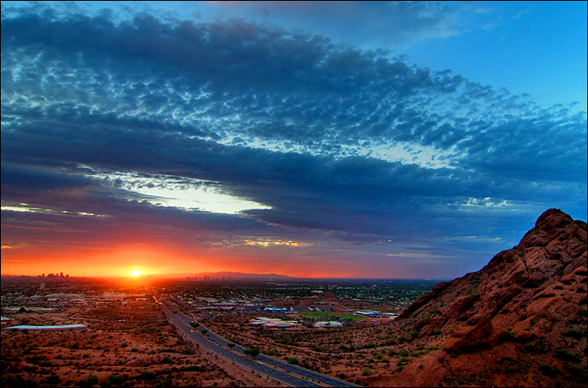
Phoenix, Arizona’s hotel accommodations have clinched the #1 spot for hotel.info’s current value for money rating.
Phoenix is the new chart leader in the USA. Hotels in Phoenix received the highest customer ratings. Most hotel operators were unable to keep the level of quality offered constant compared with the price demanded, which resulted in many cities changing places in the rankings. Hotel operators in Los Angeles apparently were once again unable to provide convincing quality, or the prices were too high – at least according to the reviews of hotel.info guests. Although hotel operators in this major city slightly improved their ranking, it still was not enough to move up in the chart.”
Photo Credit – Creative Commons Photograph by Rob Overcash Photography on Flickr.
Posted by David Porter on July 20, 2010 · Leave a Comment
 Arizona’s Queen Creek Olive Mill is a family run agri-tourism destination, and is also Arizona’s only producer of extra virgin olive oil.
We made our way to the Queen Creek Olive Mill for lunch on the way back to N. Scottsdale from our visit to the Casa Grande Ruins National Monument.
Upon our arrival, we were greeted by General Manager Rob Holmes, as well as Joey & Sydney, two beautiful daughters of owners Perry and Brenda Rae.
Rob spent about an hour with us explaining the history of Queen Creek Olive Mill, and helped us to understand the process of harvesting extra virgin olive oil from their 2,000+ olive trees. We found it interesting to learn that our Arizona climate, because of the heat, allows them to produce their olive oil without pesticides as the typical olive grove pests do not live in this arid climate.
“For more than a decade we have been experimenting with different olive (olea europaea) varieties to establish which varieties grow best in the Arizona desert evaluating the yield, bloom dates, harvest maturity dates, pollination, fruit size, cold hardiness, disease resistance, and oil quality/ profile. Our grove is home to over 16 different varieties with the Frantio, Grappelo, Pendelino, Maurino, Moraiolo, Coratina, Taggiasca and Mission as the primary varieties planted. Our trees are drip irrigated and the use of pesticides or mold inhibitors are not required as there is no issue with the olive fly or any kind of olive tree molds. Hence our grove is pesticide free.” (Queen Creek Olive Mill)
When you visit Queen Creek Olive Mill, make certain that you come with an empty stomach as you will certainly want to sample the cuisine of their Tuscan inspired eatery, del Piero.
 Rob Holmes mentioned that their Kalamata Sandwich (“Pork Shop” Italian and kalamata salami, capicola, herb roasted tomatoes, leafy greens, provolone, red onion and White Balsamic & Herb Crema on a grilled baugette) was soon to be featured on the Food Channel’s “Best Thing I Ever Ate” series, so I promptly ordered up one for lunch. I can honestly say that this was the best sandwich I have ever tasted. Absolutely delish!
They happened to also have a special Pulled Pork Sandwich on their menu that day, so Carol smiled her way through that.
There are daily tours of the olive mill, and afterwards you will certainly want to explore their large selection of olive products, extra virgin olive oil bath and beauty products, wine, and a host of local seasonal fruits, vegetables, cheeses, and much more.
This place is a veritable mélange of mouthwatering delights!
We look forward to returning in the fall for the olive harvest.
In the meantime, I’m hankering to dip some fresh baked bread in my Queen Creek Olive Mill extra virgin olive oil. YUM!
Posted by David Porter on July 17, 2010 · 5 Comments
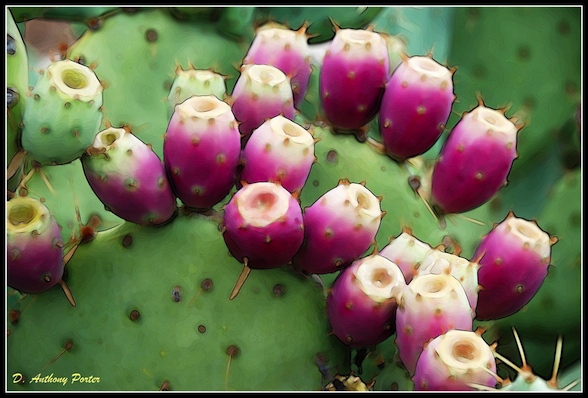
A prickly pear cactus in bloom that I photographed a few days ago, and added a wee bit of impressionism to the mix.
Posted by David Porter on July 15, 2010 · 4 Comments
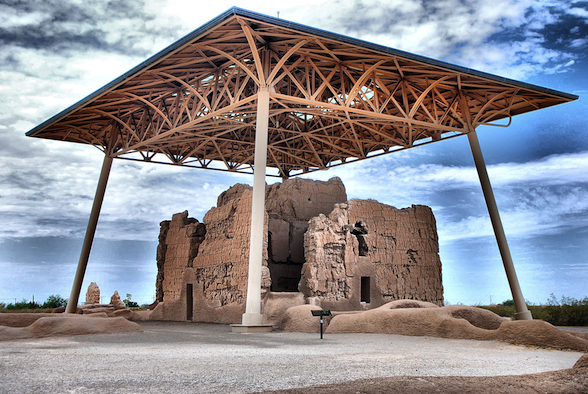
About an hour southeast of Phoenix, adjacent to the town of Coolidge, Arizona, lies the Casa Grande Ruins National Monument.
Presumed to have been built around 1350, Casa Grande is one of the largest prehistoric structures ever built in North America, and its purpose remains a mystery.
“Archeologists have discovered evidence that the ancient Sonoran Desert people who built the Casa Grande also developed wide-scale irrigation farming and extensive trade connections which lasted over a thousand years until about 1450 C.E.
The Casa Grande was abandoned around 1450 C.E. Since the ancient Sonoran Desert people who built it left no written language behind, written historic accounts of the Casa Grande begin with the journal entries of Padre Eusebio Francisco Kino when he visited the ruins in 1694. In his description of the large ancient structure before him, he wrote the words “casa grande” (or “great house”) which are still used today.” (National Park Service)
Before touring the ruins of the ancient Hohokam, we spent about 45 minutes visiting the museum, and also watched an informative 15 minute video.
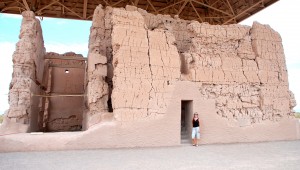
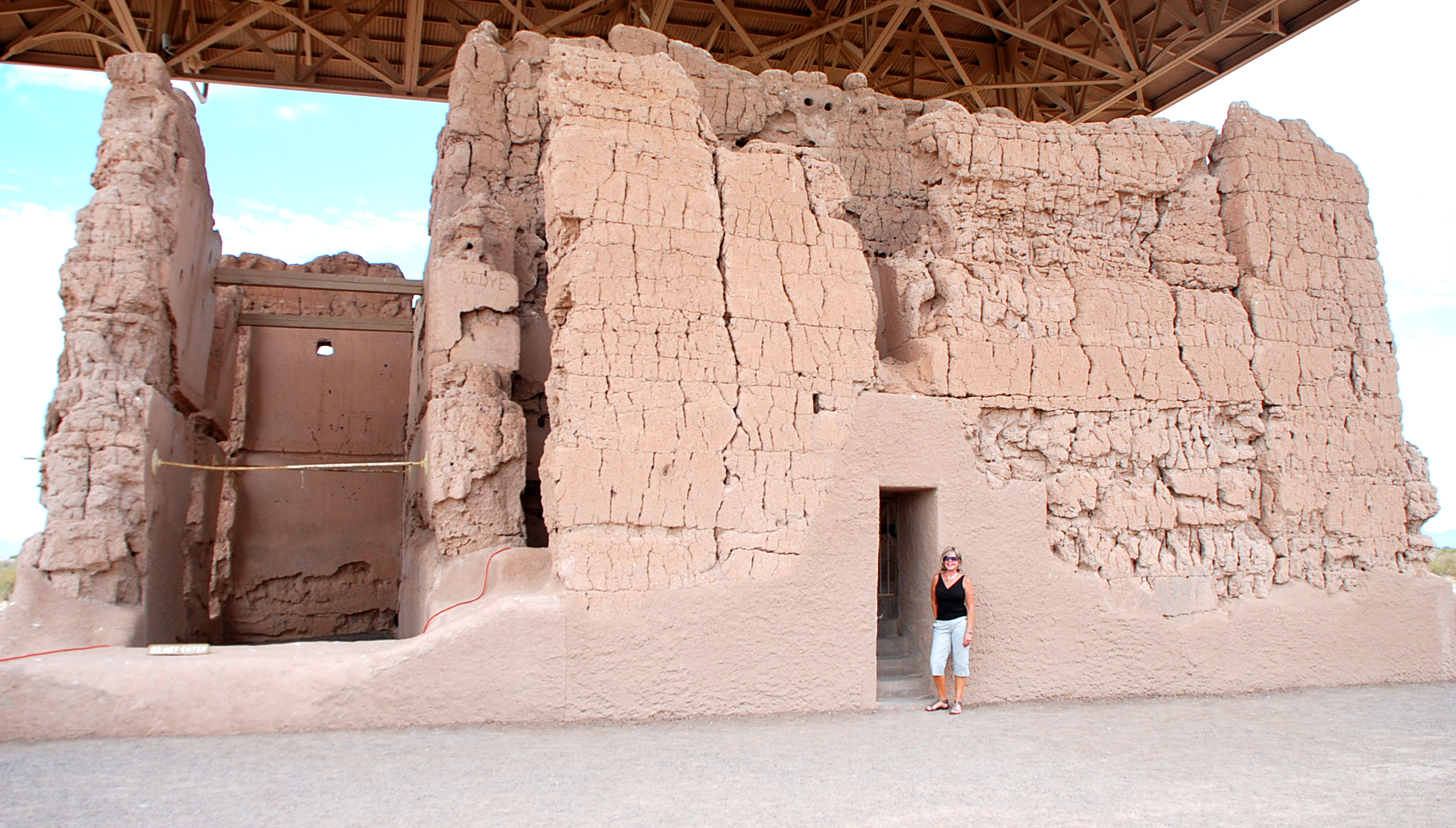
Casa Grande is 4 Stories Tall
To help give you a perspective on the scale of Casa Grande, you can see Carol standing at Casa Grande’s front door in this photograph.
Another very interesting fact about these ancient people is that they were very industrious, and created a massive canal system that would bring water from the nearby Gila River. This canal system allowed them to irrigate the land, and thereby have an agricultural system in the middle of the dry, arid desert.
As we were driving to Casa Grande, the intermittently green fields in the middle of the desert demonstrated that a similar irrigation system is evidently still in use today. In fact, for miles on our journey, we watched workman building canals along the side of the road.
When you visit Casa Grande Ruins National Monument, you will want to pack a picnic lunch and enjoy watching scores of ground squirrels playing under the shade of the mesquite trees. Your children perhaps will remember this entertainment the most.
We have visited many prehistoric sites in the Southwest, but this one is by far the largest structure we have encountered, and it is plain to see why this site became our country’s very first national monument.
 The Roaming Boomers