Today is a big day in our journey to build one of the world’s foremost online travel magazines targeted specifically towards the baby boomer and luxury traveler.
Last Thursday we were featured on the front page of the Arizona Business Gazette, and today we are featured on the front page of the business section in the Arizona Republic newspaper. (Note: the links take you to the online version of these articles)
As the article points out, October of 2008 brought an earth-shattering blow to our retirement plan, and forced upon us a complete personal and business reinvention.
We’re very excited about the interest and growth we have seen in our enterprise, and hope that reality can match the dreams we have for this new business.
We want to thank all of our loyal followers for helping us grow to these levels, and look forward to many thousands joining our journey in the near future.
If you haven’t already, follow us on Facebook and/or Twitter. Make certain to also subscribe to our free rewards club. This is where you will find special travel deals, our future monthly newsletter, and also the opportunity to win cool free stuff!
When I was in college, I bought my very first single lens reflex (SLR) camera. I chose a Minolta model as it had a cool double-exposure button that would allow me to easily expose two photographs on top of one another. I was forever going around taking photographs of trees with people’s faces superimposed.
It was also the largest financial decision I had ever made, a whopping $300! I can recall throwing up having spent so much money in a single purchase.
My two college roommates, Wayne Gorman and “Gig” Garn, also bought new SLR cameras. However, they both went with a Canon model.
We were all three enrolled at a small liberal arts college in central Michigan called John Wesley College. The school had a travel study program which would put the whole student body in Europe each year for a month. After my first thirty day trip, I realized that I needed a serious camera and thus the photography bug became a permanent part of my life.
I took photographs for the school yearbook, set up a darkroom to develop photographs, and generally became “Joe Photo”.
It was during this experience in the mid-70s that my love affair for Kodachrome slide film began. There was absolutely nothing that could produce the beautifully saturated colors of Kodachrome slide film.
Yesterday, Kodak produced the very last roll of Kodachrome film (New York Times Article). The digital age had long since driven serious photographers away from film and I suppose the small crowd of sentimentalist photographers just didn’t produce enough business for Kodak to continue the line.
Speak Up! Do you have a Kodachrome story? Share it below in the comments section.
In memory of the hundreds of rolls of Kodachrome that I have shot over the years, here’s Simon and Garfunkel lamenting their own Kodachrome loss (1981 vintage):
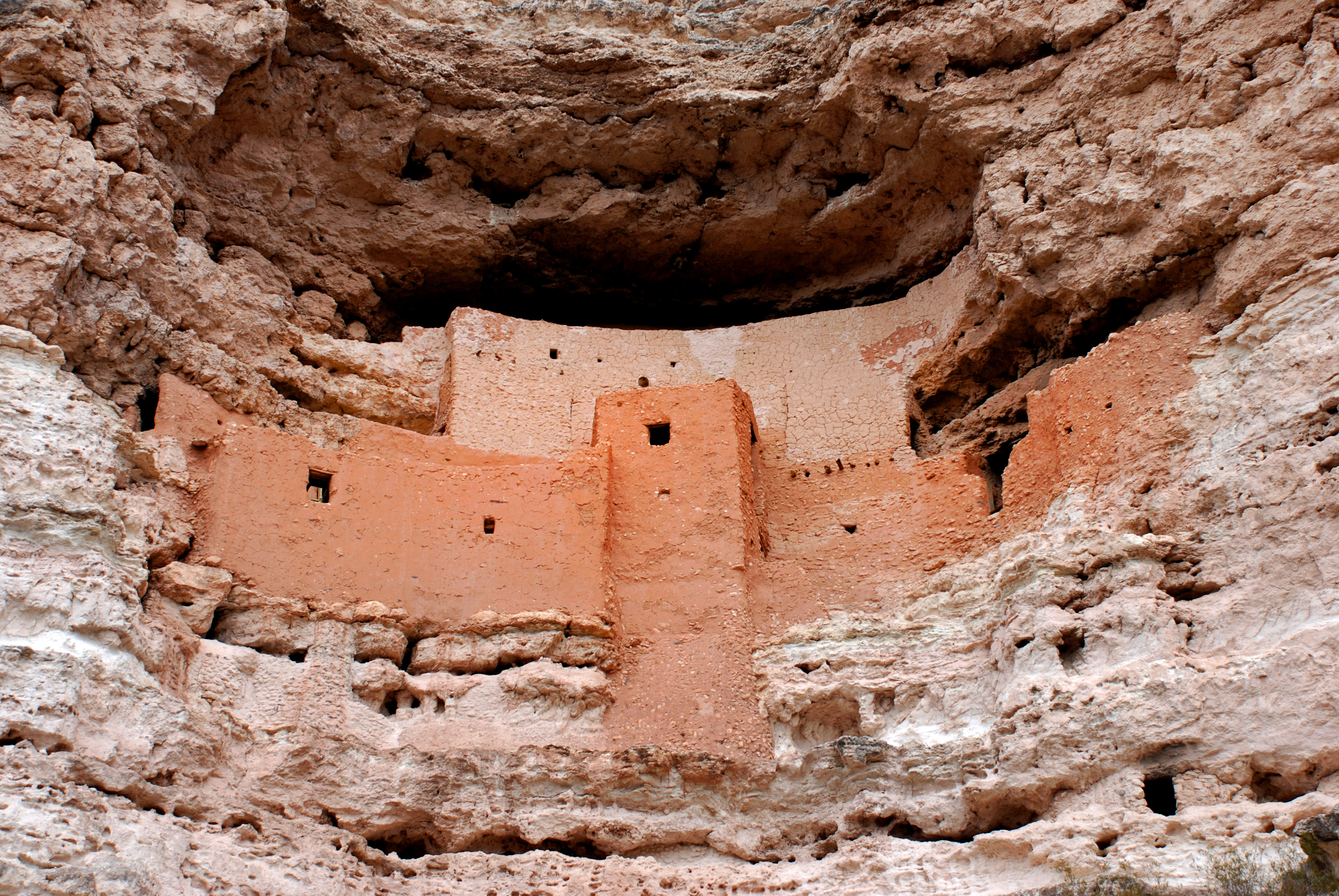
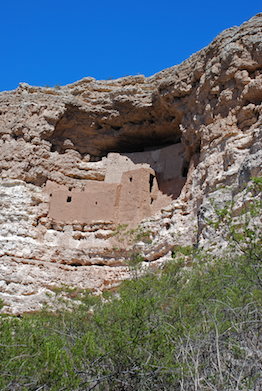
Montezuma Castle National Monument ~ Camp Verde, Arizona – Just a few short miles north of Camp Verde, and on the way to Sedona from Phoenix, lies Montezuma Castle National Monument.
This cliff dwelling is named Montezuma Castle because early settlers to the area assumed that the imposing structure was connected to the Aztec emperor Montezuma, but in reality the cliff dwelling had been abandoned almost a century before Montezuma was even born.
On December 8, 1906, President Theodore Roosevelt celebrated the passage of the Antiquities Act by declaring four sites of historic and cultural significance as our nation’s first National Monuments. Among these was Montezuma Castle, which the President identified as a place “of the greatest ethnological value and scientific interest.” Although very few original artifacts remained in the structure due to intensive looting of the site, Roosevelt’s decision assured the continued protection of one of the best preserved prehistoric cliff dwellings in North America.
Montezuma Castle National Monument quickly became a destination for America’s first car-bound tourists. In 1933, “Castle A”, a 45-50 room, pueblo ruin was excavated, uncovering a wealth of artifacts and greatly enhanced our understanding of the Sinagua people who inhabited this riparian “oasis” along Beaver Creek for over 400 years.
Early visitors to the monument were allowed access to the structure by climbing a series of ladders up the side of the limestone cliffs. However, due to extensive damage to this valuable cultural landmark, public access of the ruins was discontinued in 1951.
Now, approximately 350,000 people a year gaze through the the windows of the past during a visit to Montezuma Castle. Even 600 years after their departure, the legacy of the Sinagua people continues to inspire the imaginations of this and future generations.
Montezuma Castle National Monument is a short jaunt off Highway I-17, and is well worth a visit.
Entrance to Montezuma Castle National Park is ushered through a beautiful visitor center with paved sidewalks taking you on a very short hike to the cliff dwellings.
If you like, the park offers Ranger-led talks through the cliff dwellings late-mornings and early afternoons.
Another very nice feature of this park, and certainly a benefit to the lost tribe of Sinagua Indians, is the very close proximity to the beautiful Verde River that bends around the mountain.
It only takes about an hour to visit this park, and if you plan ahead, the park is also a beautiful place for a picnic.
Palatki Heritage Site – Ancient Cliff Dwelling and Pictographs – Sedona, Arizona – One of the great benefits of the arid climate in the southwestern United States is that it preserves ancient native American ruins, petroglyphs, and pictographs.
The Palatki Heritage Site cliff dwelling and rock art site is located near the town of Sedona in north-central Arizona. Currently managed by the U.S. Forest Service under the Red Rock Pass Program, the site is open to the general public for visits seven days a week (closed Thanksgiving and Christmas). A small visitor center and bookstore, run by the Arizona Natural History Association, is located a short distance from the parking lot.
There are two trails at Palatki Heritage Site, one trail that takes you to the Sinagua cliff dwellings, and a second that goes to the alcoves that shelter the painted symbols, or pictographs from every native culture to ever occupy the Verde Valley. There are two trails, each one is ¼ mile one way, so the round trip distance is one mile. The trail to the pictographs is fairly easy but the trail to the cliff dwelling includes about 50 uneven rocky steps. Good walking shoes are recommended. These trails are not wheelchair accessible. Vault toilets and water are available.
Palatki and it’s sister site, Honanki were the largest cliff dwellings of the Red Rock country between A.D.1150 – 1300. They were first described by Dr. Jesse Walter Fewkes, famous turn-of-the century archaeologist from the Smithsonian Institution, who gave them the Hopi names of Honanki (Bear House) and Palatki (Red House). The Hopi, however, have no specific names for these sites.
When you visit the Palatki site, make certain that you call ahead for reservations. Space and parking is very limited. If it happens to be busy, you may be disappointed when you are turned away. The site is open seven days/week from 9:30 – 3:00. Here is the number for reservations: (928) 282-3854. You will also need a Red Rock Pass to visit the Palatki Heritage Site. Make certain to pick one up before you go.
We made our visit to the Palatki Heritage site one of the stops on our journey around the Boynton Pass Loop Scenic Drive.
We also highly recommend a stop at Sedona Memories Bakery & Cafe for incredible sandwiches for a picnic. We greatly enjoy their home-made yumminess as we gawked at the beautiful surrounding in the Palatki Heritage Site.
To see even more photographs, here’s a Flickr link with literally hundreds of photographs of the Palatki Heritage Site.
 The Roaming Boomers
 Today is a big day in our journey to build one of the world’s foremost online travel magazines targeted specifically towards the baby boomer and luxury traveler.